


 A glass paste vase decorated with hunting scenes that was produced in Alexandria has been discovered in the thermopolium of Regio V in Pompeii. This type of large blue-glazed faience situla has typically been found as a garden ornament in the wealthy homes of Pompeii, but this one somehow made its way into the kitchen of a fast food joint.
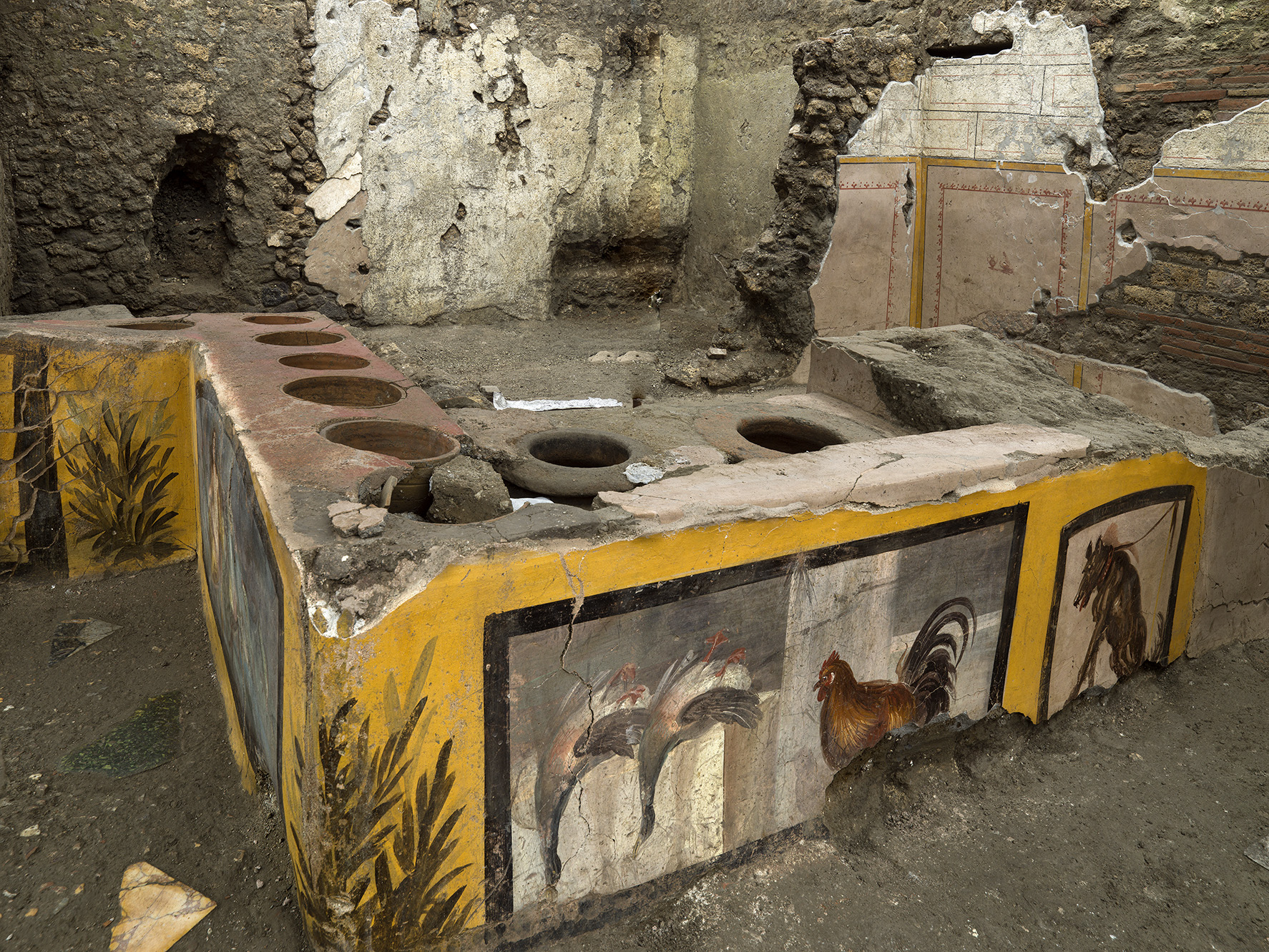 First discovered in 2019, the ancient street food stand’s vivid frescoes made it unique among more than 80 snack bar-type establishments frequented by Pompeii’s poorer residents. The main counter and service area was excavated in 2020/2021, and in 2023, the adjoining spaces began to be excavated.
 Archaeologists uncovered a service room and on the floor above it, a small two-room apartment, one of which had walls frescoed in the IV style with faux architecture painted in perspective. The floor was painted yellow. The room was furnished, and some of the objects had polychrome marble inlays. Highly ornamented wooden boxes contained personal belongings. Archaeologists think the thermopolium’s manager or owner may have lived in the apartment.
 The kitchen on the ground floor was preserved virtually intact. Cooking tools including mortars and pans and numerous wine amphorae from all over the Mediterranean were found still in their original locations.
At the time of the eruption, the room adjoining the Thermopolium served as a service room. The interior spaces appeared to be organized in a functional manner: a small bathroom was located next to the entrance overlooking Balcony Alley, while an area was intended for the storage of amphorae and containers for preserving liquids. The remaining area housed objects used for food processing, cooking, and storage.
Among the most significant artifacts found here is the finely decorated faience situla, a valuable testimony to the intense commercial and cultural exchanges that characterized Pompeii.


Click the Source link for more details
