


 After years of conservation and reconstruction, the massive Bronze Age log coffin discovered during work on the water trap at Tetney Golf Course in East Lindsey in 2018 has been transported to its new permanent home at the Lincoln Museum where it will go on public display for the first time.
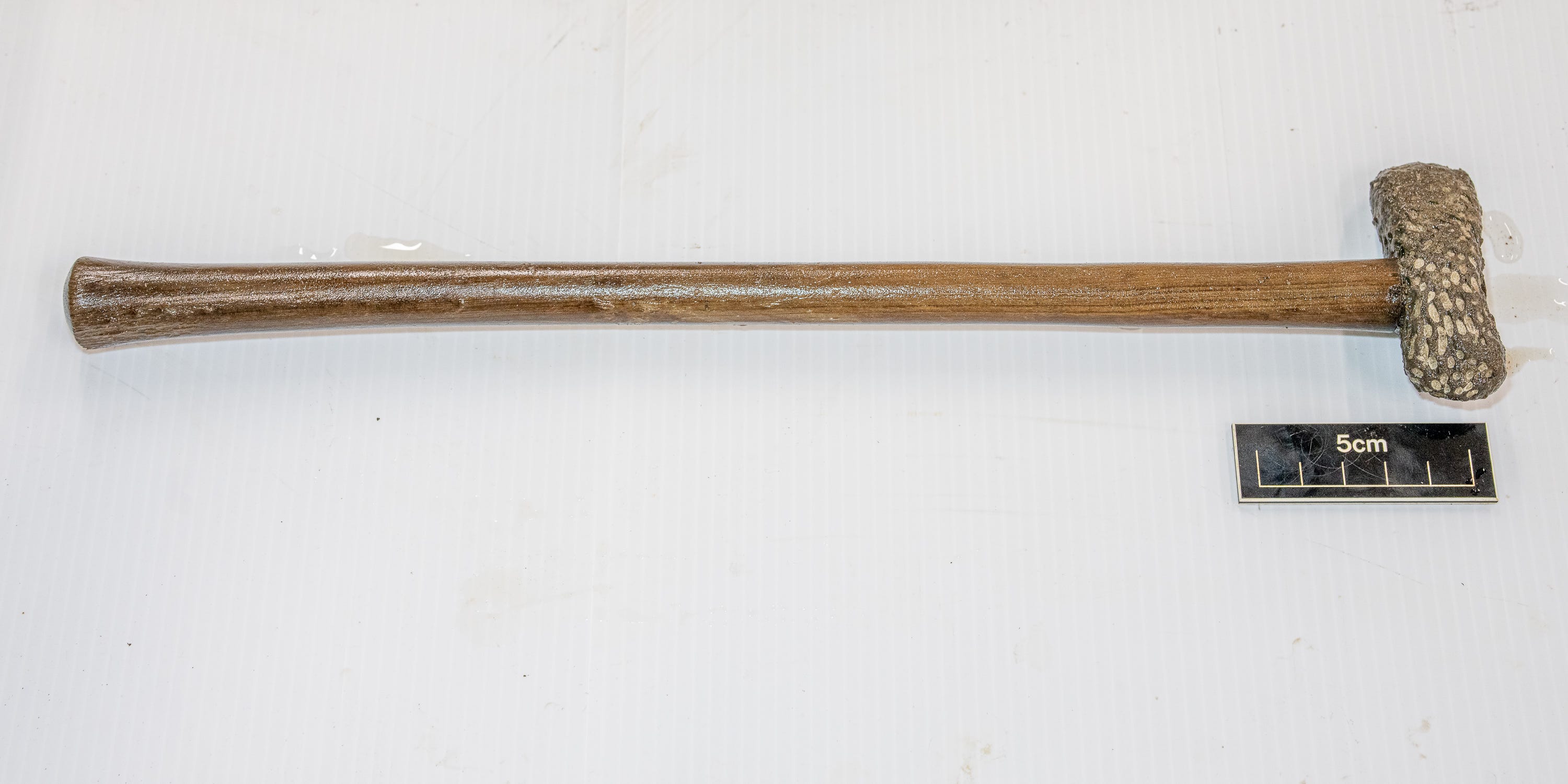
Carved from the trunk of an oak tree approximately 4,000 years ago, the coffin contained the remains of a relatively tall man (5’9″) who was in his late 30s or early 40s when he died. Osteological examination of his bones revealed osteoarthritis from a lifetime of heavy physical labor. He was buried with a miniature battle axe with a stone head still mounted to its complete wooden handle in like-new condition.
 The coffin in 10 feet long, but was broken into several pieces when it was discovered in the muddy soil. The largest piece is almost eight feet long and weighs half a ton. To preserve it from rapid drying and crumbling to dust after its discovery exposed it to air, the pieces were placed in cold storage at the Mary Rose Trust in Portsmouth for a year. They were then transported to the York Archaeological Trust for stabilization, conservation and reconstruction.
Further analysis and research was led by a team of independent specialists, with the coffin providing a precious glimpse into elaborate Bronze Age burial practices.
An investigation of the plant and pollen remains found inside the coffin revealed that the man was laid on a bed of oak and yew branches and had a garland of flowers around his neck. Hazelnuts and other plants may have formed part of a food offering.
The Tetney Coffin was moved to Lincoln Museum last week. Museum conservators are now reading the coffin for display, stabilizing it in its new space and creating a custom support structure for its long-term exhibition.
The Lincoln Museum closed in October 2024 for a wide-ranging redevelopment. Every artifact on display was removed to safe storage to make way for a complete redesign of the archaeology gallery. The new gallery will feature interactive displays that will give visitors an immersive, hands-on experience of Lincolnshire’s history and pre-history. The Tetney Coffin will be the flagship attraction of the museum’s renewed archaeology gallery when it reopens next year.
Click the Source link for more details
