
 A nursing professor dispels common myths, explains the risks, and highlights promising new treatments. Breast cancer is one of the most commonly diagnosed cancers in the world and remains a major cause of cancer-related illness in the United States. A new case is identified in the U.S. roughly every two minutes, and in 2025 alone, […]
Click the Source link for more details
These Breast Cancer Facts Could Save Your Life
Hidden Brain Cells May Hold the Key to Alzheimer’s
 Scientists have found a special group of microglia (brain immune cells) that can help protect against Alzheimer’s disease. These protective cells reduce inflammation, slow the buildup of harmful plaques, and may preserve memory and brain function. This discovery not only explains why certain genetic traits reduce Alzheimer’s risk but also opens up the possibility of […]
Click the Source link for more details
Doctors “Astounded”: Long-Held Belief About Coffee and Heart Rhythm Was Wrong
 In a surprising finding, the first randomized clinical trial revealed that drinking a cup of coffee each day reduces the risk of atrial fibrillation. Regular coffee consumption may actually help protect against atrial fibrillation (A-Fib), a common heart rhythm problem that causes a fast, irregular heartbeat and can increase the risk of stroke or heart […]
Click the Source link for more details
Mysterious And Feared Underground World That No One Can Visit And Return To Tell About – Cherokee Reveal A Secret
Ellen Lloyd – AncientPages.com – As he lifted his gaze, a vast black cloud loomed overhead, and thunder echoed around him. The entrance to the underground world he had just escaped had vanished without a trace. Exhausted and disoriented, he summoned every ounce of strength to make his way back to the village. When the villagers saw him, they were astonished, believing him lost forever. Though it had felt like an eternity to them, only a single day had passed for him.

He remembered the promise he had made: never to reveal what he had witnessed or whom he had encountered beneath the earth. For a time, he honored that vow. But eventually, like those before him who could not resist sharing their story, fate caught up with him, and his life ended soon after.
The Cherokee tell of this mysterious underground realm between Georgia and North Carolina—a place shrouded in secrecy where few return from its depths unscathed. Some who do find their way back are claimed by death soon after.
What is this enigmatic subterranean world? Why must its secrets remain hidden? Let us listen to the wisdom of the Cherokee people, guardians of stories that inspire awe and caution alike, so that we may learn about this dangerous yet captivating world beneath our feet.

This is a preview of our premium article available only to members of Ancient Pages.
Become a member to read more – Click here
If you are already a member and have logged in to your account, you can access the article here

See also:
Legend Of The Mysterious Underwater People Whose Name May Never Be Spoken Aloud
Click the Source link for more details
2950 Feet Wide: Earth’s Largest Modern Crater Discovered in China
 The Jinlin crater, measuring 900 meters across, formed during Earth’s current geological epoch. A recently identified and exceptionally well-preserved impact crater is offering scientists new insight into how objects from space have struck Earth over time. In a study published in Matter and Radiation at Extremes by AIP Publishing, researchers from Shanghai and Guangzhou, China, […]
Click the Source link for more details
CRISPR Supercharges a Meatlike Fungus Into a Sustainable Protein Powerhouse
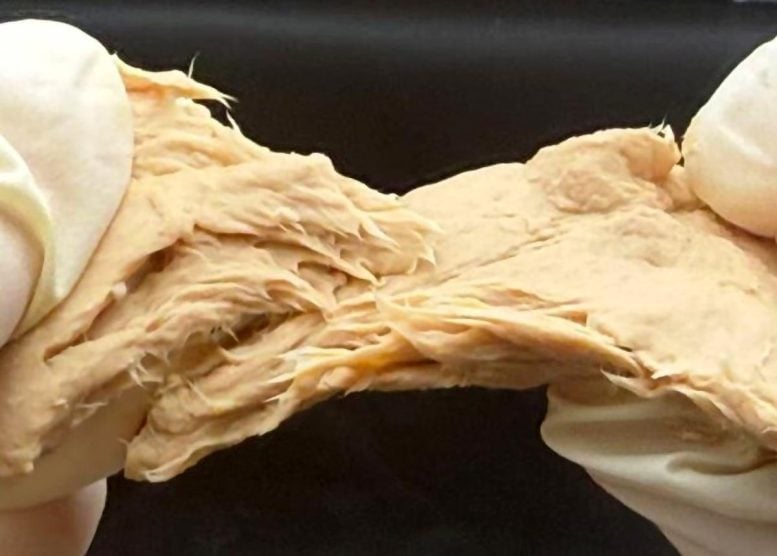 Researchers used CRISPR to enhance a naturally meat-like fungus, boosting its digestibility and production efficiency. The modified strain grows faster, uses far fewer resources, and lowers greenhouse gas emissions by up to 60%. It also dramatically outperforms chicken farming in land and water use. The findings highlight a promising path for eco-friendly protein. CRISPR Boosts […]
Click the Source link for more details
A Glow-in-the-Gut Pill Could Make Colonoscopies Optional
 Researchers designed microscopic hydrogel spheres filled with blood-detecting bacteria to identify gastrointestinal bleeding non-invasively. After being swallowed and passing through the body, the spheres can be magnetically collected and analyzed within minutes. In mice, the brightness of the bacterial glow revealed how severe colitis was. The technology could pave the way for easier gut-health diagnostics. […]
Click the Source link for more details
‘Turncoat’ by Dennis Sewell review
Downing Street is globally recognised as the home of the British prime minister. It is also an early example of branding by the man who built Number 10, George Downing. Yet, as this lively and engaging biography tells us, this was probably the least interesting of Downing’s exploits. In Turncoat Dennis Sewell uncovers the life of this secretive spymaster who moved seamlessly between serving Oliver Cromwell in the 1650s and then Charles II in the 1660s. This is the first biography of Downing for a century (the last was John Beresford’s The Godfather of Downing Street in 1925) and it shines a light on a man who fleetingly appears in other histories, but who, as the author rightly argues, deserves to be better known. Was he, as Sewell asks, ‘the biggest scoundrel in Stuart England’?
Downing was born in Dublin in 1623 where his father Emanuel practised law; his mother, Lucy, was the sister of John Winthrop, the first governor of the Puritan colony of Massachusetts Bay. In 1638 the couple accepted Winthrop’s invitation to join him and in 1640 young George was one of the first intake at Harvard College. Unfortunately, Harvard’s master, Nathaniel Eaton, was a bully and sadist, who was rapidly sacked, but not before his wife had served the students pudding thickened with goat’s dung.
George Downing’s education had prepared him for a career in the congregational ministry and in 1645 he served as a ship’s chaplain in the Caribbean. When his ship sailed to England the following year Downing accepted a post as chaplain in the New Model Army regiment of John Okey, a man he would later betray. He then became chaplain to the regiment of Arthur Hesilrige, the parliamentarian governor of Newcastle upon Tyne. Downing was being noticed, and in 1649 Oliver Cromwell appointed him scoutmaster general of the English army in Scotland. He was no meek man of the cloth and was wounded three times during Cromwell’s ‘great victory’ at the Battle of Dunbar in 1650.
The main duty of a scoutmaster was to gather intelligence and Downing was in his element. He not only employed networks of spies wherever he was posted, but also turned key opponents of the Cromwellian regime into informers and agents. When the New Model Army entered Edinburgh after their victory at Dunbar, the governor of the castle, Walter Dundas, was remarkably reticent about meeting the English with force. Downing had already turned one of the governor’s servants into a double agent and may also have had Dundas in his pocket. The governor capitulated to the English and marched out of the castle with full military honours to a hearty dinner in Downing’s quarters.
Using his web of spies and double agents, Downing now kept the council of state in London reliably informed about the Scots’ secret negotiations for the return of Charles II to the throne. In 1654 he married Lady Frances Howard, the sister of the future earl of Carlisle, which opened up more political contacts. He represented Edinburgh in Cromwell’s first Parliament in 1654 and Carlisle in the Parliaments of 1656 and 1659. In 1657 Downing was posted as the English envoy to The Hague, where he and his spies were active in thwarting the designs of Charles II’s court in exile. The Restoration in May 1660 was a moment of acute anxiety for Downing, but he negotiated his continued employment with astonishing success. He was knighted by Charles II and kept his diplomatic post in The Hague.
Dennis Sewell admits that, as a good spymaster, Downing left no real evidence of how he achieved this remarkable transition, but provides some amusing speculation. Did Downing visit Charles II secretly dressed as a tramp to pledge his allegiance? Did he blackmail Tom Howard, his wife’s relative and a confidant of the king, to ease his path? Or did he act as a double agent himself by passing information to Charles II even before the Restoration had been signed, sealed, and delivered?
Downing certainly betrayed some of his former colleagues, and he pulled off a spectacular coup when he had three of the regicides, including John Okey, kidnapped in Amsterdam and returned to England as traitors. As Sewell pointedly observes, this was probably the first case of an extraordinary rendition (the abduction of an individual from one country to another by illicit means). On the scaffold, and with the spectre of a grisly death by hanging, quartering, and burning before him, Colonel Okey forgave his former chaplain ‘who pursued my life to the death’.
Downing was rewarded with a baronetcy and further lucrative offices, including secretary to the treasury. His New England background made him an ideal adviser to Charles on the Americas and the English acquisition of New York in 1664. As both his involvement in public affairs and his personal wealth grew, so too did resentment. He was suspected of corruption and it was reported that he kept six prostitutes in business, while Samuel Pepys, his former clerk, recorded that Downing was regarded as an ‘ungrateful villain’. In 1672 he was briefly imprisoned in the Tower of London for disobeying the king’s orders while on a diplomatic mission. Downing died in 1684 as a wealthy man and the greatest landowner in Cambridgeshire, though he did not live to see the completion of the development of the London address which bears his name.
Dennis Sewell’s book not only illuminates the shadowy world of 17th-century spycraft, it also traces the social, religious, and political networks that propelled Downing from his humble beginnings to positions of power. Yet we know little about Downing’s relationships with his family, nor if his career as a turncoat ever caused him qualms of conscience. Even the portrait of a self-confident, portly gentleman on the book’s cover does not give us any clues. The author does not analyse this arresting painting because its provenance is doubtful, the painter is unknown, and it may not even be Downing at all. The personal life of this spymaster and turncoat remains secretive to the very end.
- Turncoat: Roundhead to Royalist, the Double Life of Cromwell’s Spy
Dennis Sewell
Atlantic, 374pp, £25
Buy from bookshop.org (affiliate link)
Jackie Eales is President of the British Association for Local History.
Click the Source link for more details
Frozen 40,000-Year-Old Mammoth Reveals Shockingly Intact RNA and Hidden Genetic Secrets
 For the first time, researchers have uncovered Ice Age RNA preserved within permafrost mammoth tissue, offering a rare glimpse into real-time gene activity from tens of millennia ago. Researchers at Stockholm University have, for the first time ever, isolated and sequenced RNA molecules from woolly mammoths that lived during the Ice Age. The team analyzed […]
Click the Source link for more details
Four early medieval spears found in Lake Lednica – The History Blog
 Four early medieval spears, including one so finely decorated that it could be of princely origin, have been recovered from the bed of Lake Lednica. Dendrological analysis and radiocarbon dating found that the spears date to the second half of the 10th and first half of the 11th century.
A Piast dynasty stronghold was located on Ostrów Lednicki, an island on Lake Lednica. More than 280 military artifacts, including 145 axes, 64 spearheads, and 8 swords, from the reigns of Piast dynasty kings Mieszko I (r. ca. 960-992) and Bolesław the Brave (992-1025) have been recovered from the lake bed, the largest collection of early medieval weaponry ever discovered at a single site.
Scientists have two leading theories as to why so many weapons ended up in the lake. They may have fallen into the lake during the battles for the Lednica stronghold, fought on the bridges during the invasion of Poland by the Czech prince Bretislaus in the 1130s. The second hypothesis, a ritual one, posits that the weapons were placed in the water as an offering to deities or spirits.
“Such practices are known from earlier periods in many places in Europe. Water was perceived as a gateway to the world of the dead, and throwing a valuable object into it was a gesture with profound symbolic meaning. It is possible that the arsenal gathered at the bottom of the lake is an echo of both turbulent historical events and ancient beliefs,” the [Museum of the First Piasts in Lednica] said.

The four spears discovered this season are very different from each other and have their own unique features. The smallest spearhead is rhomboidal in shape and was found still mounted to its wooden shaft. The shaft is made of ash and survives in several pieces totalling approximately 2.1 meters (6’11”) in length. Only two spears from Lake Lednica have such a well-preserved shaft, and they are longer exceeding three meters in length. The tip has a ring made of antler, a feature never found before in a medieval spear.
The second spearhead is longer and slender and is shaped like a willow leaf, a common design in early medieval weaponry. It too has a section of surviving shaft. The spearhead is decorated with a serpentine line of wolf teeth on both sides. Several examples of spearheads of this type have been found in Lake Lednica, indicating they may have been manufactured locally.
 The third spearhead is the longest of the four and has a triangular profile. It was made using a welded technique that repeatedly forged together soft, low-carbon iron alloys with hard, high-carbon alloys for added strength. This was the apex of combat forging technology in Europe at the time. It too is decorated with the wolf teeth design. Only a few fragments of the wooden shaft have survived.

 The fourth is the most spectacular of them all. It is decorated along the blade with spiral and triskelion motifs and set in a socket that is decorated with the same motifs. There are wings decorated with braided designs mounted to the socket. The ends are pointed, and may represent stylized claws or beaks. Rows of small dots fill in the space between the woven braid edges. The remnants of bronze plating are still visible, but researchers found traces of no fewer than six metals in the spearhead: silver, gold, copper, tin, zinc, lead and alloys thereof. Three examples of spears with similar ornamentation have been found in the lake, but none of them have this specimen’s incredible panoply of precious metals. This is so exceptional an object that it may have been the insignia of royalty or nobility rather than a use weapon, or perhaps had a ritual purpose.
The discovered artifacts, especially the richly decorated princely spearhead, require further research. This will help determine the production technology. Isotope analyses of selected metals found on the princely spear are also planned to determine their origin, which could help determine the origin of this prestigious item.

When conservation is complete, the spearheads will go on display at the Museum of the First Piast Dynasty in Lednica.
Click the Source link for more details