

Conny Waters – AncientPages.com – The transition to agriculture in Europe involved a period of coexistence between hunter-gatherers and the early farmers from Anatolia.
New findings indicate a gradual increase in local population mixing as these early farmers progressed towards Central Europe via the “Danube route.”
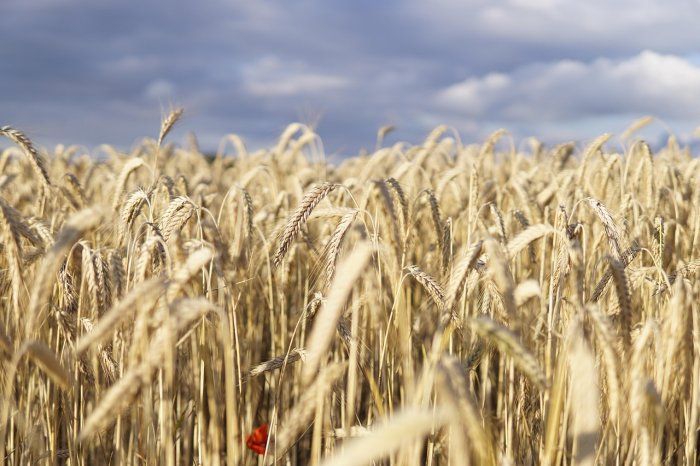
Image credit: Manu_H – Pixabay
Researchers from the University of Geneva (UNIGE), in cooperation with the University of Fribourg and Johannes Gutenberg University Mainz, used computer simulations and ancient genetic data to gain insights into these people’s interaction dynamics.
The shift from a hunter-gatherer lifestyle to one centered on agriculture represents a significant milestone in human history.
In Europe, this transformation commenced nearly 9,000 years ago with the migration of agricultural communities from areas adjacent to the Aegean Sea and western Anatolia, now known as Asian Turkey. These groups traversed what is referred to as the “Danube Route” into Central Europe, reaching regions such as northern Germany. Prior to the full transition from a hunter-gatherer existence to an agrarian society, these two cultures coexisted for several generations.
But this Neolithic transition was a gradual process of prolonged cohabitation. Scientists have extensively debated whether this transition happened through the transfer of knowledge to nearby farming populations or through the mixing of populations as farmers migrated. Archaeological evidence, including the coexistence of artifacts from both cultures, along with paleogenomic data from well-preserved human remains, supports the hypothesis that migration and mixing played key roles in this significant period of change.
Mathias Currat’s team at UNIGE’s Department of Genetics and Evolution explored interactions between two populations over time. They studied demographic dynamics along the “Danube route” to determine if population mixing was consistent or intensified over time. Using computer models, they simulated Neolithic expansion, evaluating geographic locations, population size, reproduction rates, migrations, genetic mixing rates, and potential competition.
According to Mathias Currat the simulations enabled the generation of thousands of genetic scenarios. These scenarios were then compared with data from 67 prehistoric individuals from areas where the two groups coexisted. By applying statistical methods, researchers could estimate the most likely demographic parameters.
The findings show that during the early farmers’ expansion into northwest Europe, genetic mixing with hunter-gatherers was initially infrequent but gradually became more common in specific areas over time.
According to Alexandros Tsoupas, a researcher in Mathias Currat’s group and the study’s lead author, “Our research demonstrates that the Neolithic transition was not characterized by violent conflict or complete replacement. Instead, it occurred through extended cohabitation with progressively increasing genetic admixture.”
The study shows early farmers had a demographic advantage with populations five times larger than hunter-gatherers. Some farmers occasionally made long-distance “migratory leaps,” aiding their rapid advance toward central Europe.
These findings reveal that the Neolithization of Europe was a complex process of contact, cohabitation, and mixing, not mere colonization. The study shows how combining ancient genetics and modeling can trace primary stages in human history.
Written by Conny Waters – AncientPages.com Staff Writer
Click the Source link for more details